Stay current on DG Matrix announcements, milestones, and stories from across AI data center power, grid modernization, and fleet electrification.
Get the latest news, event invitations, and exclusive insights delivered directly to your inbox.
For press releases, interviews, media kits, or collaboration opportunities, our communications team is here to help.
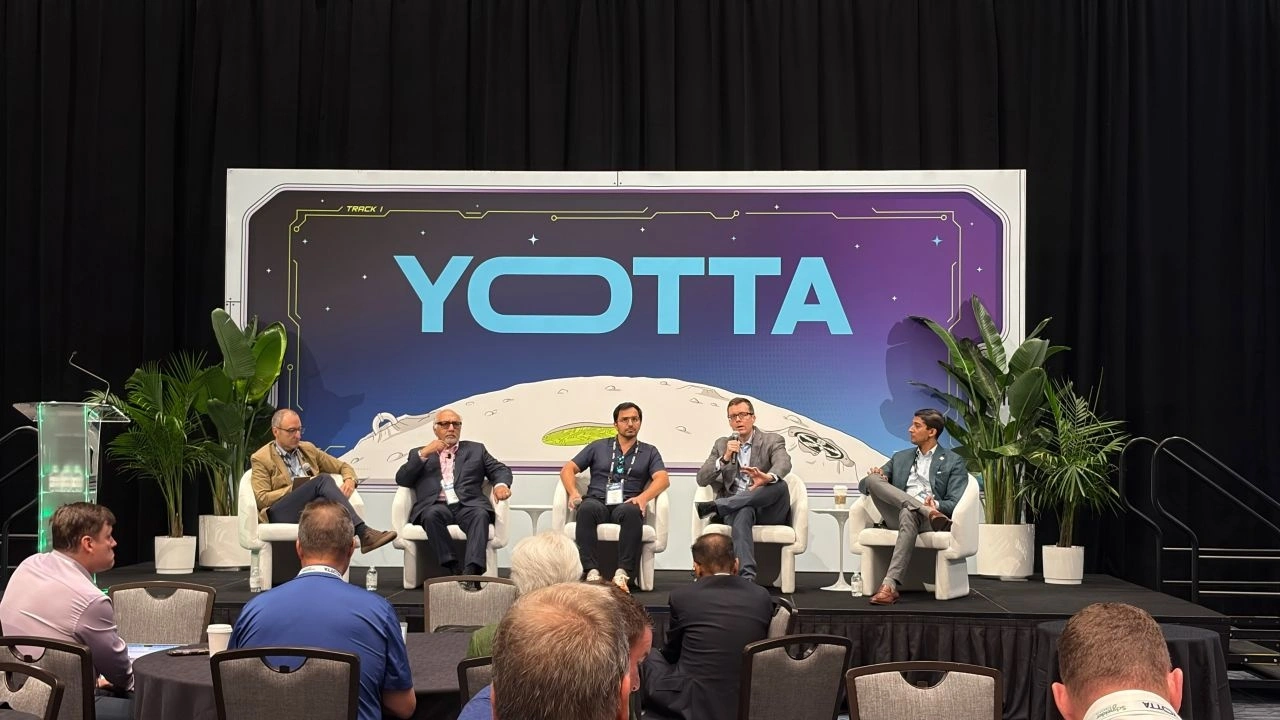
DG Matrix hosted its Energy Summit at Yotta 2026 in Las Vegas, bringing together nearly 700 attendees to explore the power infrastructure challenges shaping the next generation of AI data centers. The discussion focused on a critical question for the AI industry: how can power infrastructure evolve at the same speed as compute? Industry leaders explored how to rewire the data center power stack, accelerate the adoption of new technologies, improve bankability, and rethink infrastructure procurement as AI deployment cycles continue to accelerate. DG Matrix also showcased its Interport™ multi-port solid-state transformer (SST) platform, demonstrating how software-defined power infrastructure can simplify the transition from AC to 800 VDC, support dynamic GPU loads, and help accelerate AI data center deployment. These capabilities align with the DG Matrix broader approach of using Interport to convert, route, and control power across the grid, on-site generation, energy storage, and compute loads through an integrated architecture. Thank you to everyone who joined us in Las Vegas and contributed to the conversation around building the power infrastructure required for the next era of AI. We look forward to seeing you again in Las Vegas next year.
Leveraging STMicroelectronics’ latest-generation silicon-carbide devices, DG Matrix’s Interport™ now delivers 400 kW at higher densities MORRISVILLE, N.C.--( BUSINESS WIRE )-- DG Matrix, the global leader in solid-state transformer solutions, today announced continued collaboration with STMicroelectronics (ST), a global semiconductor leader serving customers across the spectrum of electronics applications. Since its inception, DG Matrix has utilized ST’s silicon carbide (SiC) technology at the heart of Interport™ multi-port solid-state transformer platform. The use of ST’s SiC technology has contributed to a significant performance breakthrough: doubling the Interport’s output from 200 kW to 400 kW within essentially the same power module footprint. The same principles that enabled this breakthrough, delivering more power without increasing power module space requirements, are increasingly critical to supporting the growth of large-scale AI datacenters. The announcement arrives at an inflection point for the industry. SemiAnalysis, in its landmark “ Inside the 800VDC Revolution ” report, projects that 800 VDC power architecture underpins approximately 39 GW of new datacenter capacity by 2030, creating a multi-billion-dollar opportunity for solid-state transformers. As GPU rack power densities surge past 600 kW and hyperscalers accelerate their transition to 800 VDC distribution, SemiAnalysis identifies solid-state transformers as the central enabling technology. DG Matrix's use of ST’s SiC technology is helping advance what solid-state transformer technology can deliver. The performance leap comes from the use of silicon carbide technology, which enables significant performance improvements and efficiency above 98.5%. These are the same advanced SiC components ST supplies for leading electric vehicle powertrain applications, among the most demanding power electronics environments. The field experience gained through automotive applications provides DG Matrix and its datacenter and electrification customers with additional confidence in the performance and reliability of the underlying SiC technology. ST has supported DG Matrix’s ongoing product development efforts by providing access to advanced SiC technologies and technical expertise. The collaboration extends beyond component supply. ST has provided DG Matrix with technical support and insights into relevant technology developments to help optimize the use of SiC devices within the Interport™ platform. DG Matrix’s application experience provides insights into system-level requirements, including voltage, current, and thermal performance considerations for future generations of power devices. ST’s advanced SiC devices have strong surge current handling capabilities. This feature is important for datacenter applications. AI workload transients are placing increasingly stringent demands on power electronics systems. The collaboration is rooted in a relationship that predates DG Matrix itself. Co-founder and Chief Technology Officer Dr. Subhashish Bhattacharya spent years developing power electronics applications on ST’s devices. His work includes solid-state transformers for DC grid implementations, traction motor drives across multiple vehicle platforms, and DC-DC converters for auxiliary power systems. Dr. Bhattacharya is a founding faculty member of both the FREEDM Systems Center and PowerAmerica. PowerAmerica is the U.S. Department of Energy’s institute for wide bandgap and Gallium Nitride power electronics. He helped shape the collaborative framework. This framework facilitated exchanges between SiC device manufacturers, such as STMicroelectronics, and leading research institutions. That decade-plus of industry and research experience is embedded in DG Matrix’s product architecture from the ground up. “The performance achieved by DG Matrix’s innovative Interport™ technology using ST’s SiC devices opens new possibilities for efficient power infrastructure in AI datacenters and next-generation electrification. We have worked with DG Matrix since the company’s early stages and look forward to continuing our collaboration in advancing power density and reliability,” said Rino Peruzzi, President, Americas Region, STMicroelectronics. "STMicroelectronics has supported our development efforts from the beginning. They provided technical engagement and gave us access to advanced silicon-carbide technology. This support contributed to a power density breakthrough that defines the Interport's competitive position. As SemiAnalysis projects the 800 VDC transition creating a multi-billion-dollar opportunity for solid-state transformers, DG Matrix believes its technology and product roadmap position the company to play a leading role in this emerging opportunity,” said Haroon Inam, CEO and co-founder of DG Matrix. As DG Matrix grows, it focuses on higher-voltage medium-voltage platforms. The company aims for higher-volume production across hyperscaler, neocloud, and electrification deployments worldwide. It uses future generations of SiC technology to support its product roadmap. ST’s technology integrates with DG Matrix’s growing Interport™ product family. This integration supports the development of scalable and resilient power infrastructure. It benefits AI datacenters, utility microgrids, and electrification applications. About DG Matrix DG Matrix, the global leader in solid-state transformer solutions, is unlocking power as the binding constraint on AI. It is removing this critical bottleneck of stranded power by building the intelligent power fabric of the AI datacenter. Built on the world’s first commercially available, programmable multi-port solid-state transformer, the company’s AI-enabled Interport™ platform converts, routes and controls every electron, between the grid, on-site generation, storage and compute loads through a single, software-defined stage. DG Matrix delivers an integrated and simpler solution for faster deployment, lower energy costs, native 800 VDC readiness and protection from GPU pulse loads. Because speed to power is speed to inference, DG Matrix helps hyperscale, neocloud and colocation operators bring AI capacity online in months instead of years — at scale, anywhere in the world. Learn more at https://www.dgmatrix.com/ .
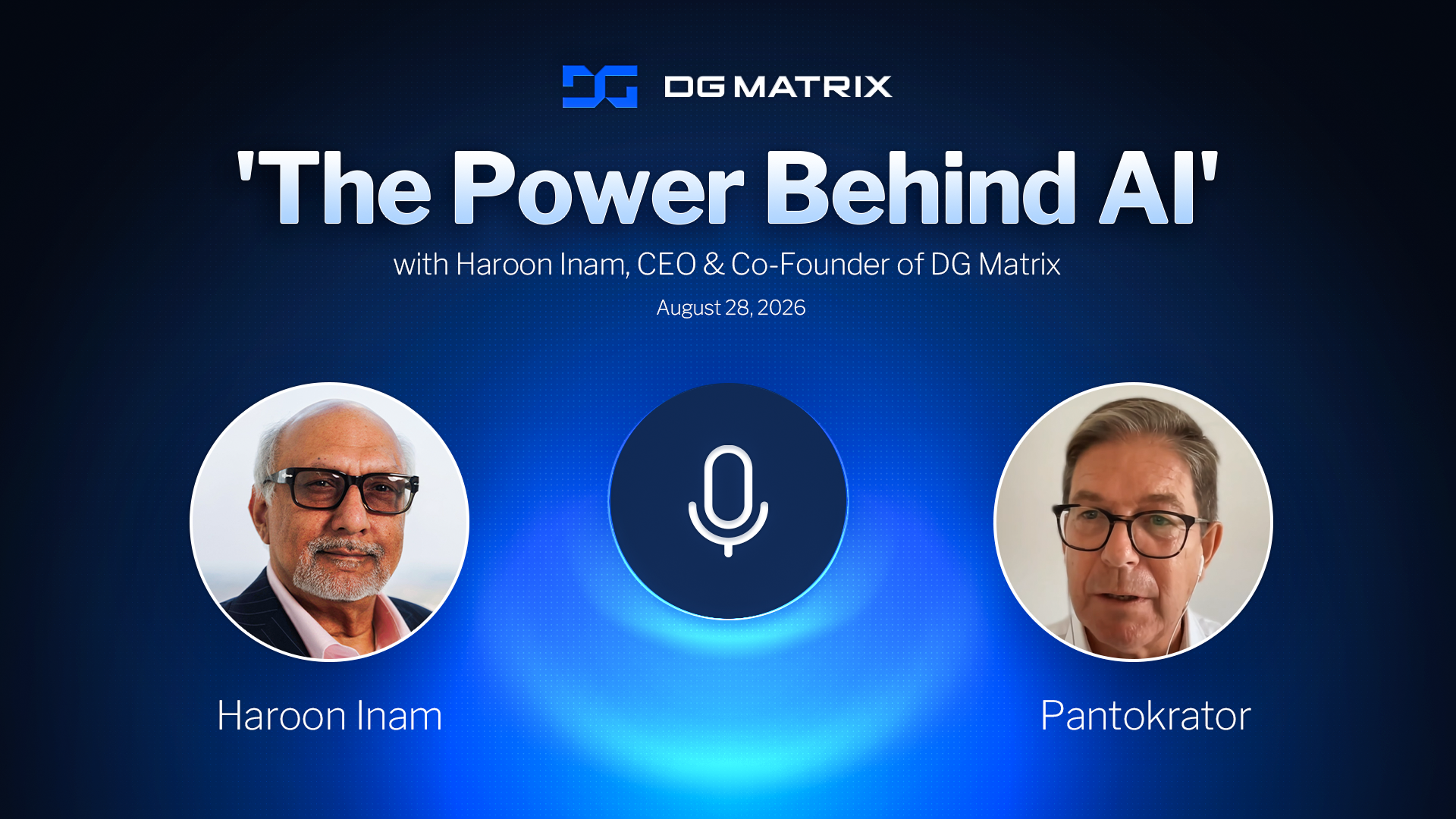
In this conversation, Haroon Inam, CEO of DG Matrix, discusses why power availability has become one of the defining constraints on AI infrastructure and how a new approach to power architecture can help meet the rapidly growing demands of AI data centers. Haroon explores how the DG Matrix Interport™ platform, a software-defined, multi-port solid-state transformer, integrates multiple energy sources and delivers power where it is needed across modern infrastructure. He also discusses the shift from conventional power conversion toward intelligent power routing and the role this transformation can play in accelerating the deployment of AI infrastructure. Topics covered include: Why power is becoming a critical bottleneck for AI growth How solid-state transformer technology can simplify legacy power architectures Integrating grid power, energy storage, and distributed generation Using software-defined power systems to improve infrastructure flexibility The DG Matrix vision for building the power fabric for the intelligence age “Power is the limit today. It’s not the GPUs or the chips.” — Haroon Inam See full podcast: 'The Power Behind AI' with Haroon Inam, CEO & Co-Founder of DG Matrix | Pantokrator Podcast
Solid State Transformers Could Reshape AI Infrastructure VC Firms Pour $280 Million Into Startups Heron Power, DG Matrix and Amperesand Three companies building next-generation power conversion technology have raised a combined $280 million in the past year, while another has been acquired by a major power vendor. These deals anticipate that the solid-state transformer (SST) will play a key role in the next phase of the AI buildout. The transformer, a device whose core design dates to the 19th century, is giving way to software-defined power electronics that are purpose-built for the AI era. The SST is emerging as a critical piece of the transition to 800 VDC power distribution, the architecture that NVIDIA and its partners are driving for next- generation AI infrastructure. SSTs also have the potential to help address “speed to power” for AI data center campuses, which face delays in the transformer supply chain. The numbers tell part of the story: Heron Power closed a $140 million Series B in February 2026, co-led by Andreessen Horowitzʼs American Dynamism Fund and Breakthrough Energy Ventures. DG Matrix closed a $60 million Series A the same month, led by Engine Ventures with participation from Mitsubishi Heavy Industries, ABB, and others, bringing total capital raised to over $100 million. Amperesand raised an $80 million Series A in November 2025, co-led by Walden Catalyst Ventures and Temasek, targeting 30 megawatts of commercial deployments in 2026. Eaton completed its acquisition of Austin-based Resilient Power Systems in August 2025, bringing medium-voltage SST technology into one of the worldʼs largest power management companies. Meanwhile, two other public companies, Enphase Energy and SolarEdge, have recently launched SST offerings specifically targeting AI data centers. The common thread: the traditional transformer cannot keep pace with the speed, density, and power scale that AI infrastructure now demands. “The transformer hasnʼt fundamentally changed in 100-plus years,” said Haroon Inam, Founder & CEO, DG Matrix. “Copper or aluminum windings around a steel core, likely oil-filled, built for a single purpose. That works when a server rack pulls 5 kilowatts and a workload is predictable. “It doesnʼt work when a single NVIDIA MGX rack demands 600 kilowatts, swings from idle to full load in microseconds, and sits behind a grid interconnection queue thatʼs three to five years long.” For the data center sector, SSTs are an emerging technology currently moving from the lab and pilot work into prototypes and first commercial offerings. Broad deployment will require operator comfort at data-center scale. But the AI boom offers a compelling opportunity for SST specialists, and investors and equipment vendors are paying full attention. Hereʼs a deep dive into SSTs and the leading companies and supporting players in the STT ecosystem. Why Solid-State Transformers Matter A solid-state transformer (SST) replaces traditional windings and cores with power semiconductors, primarily silicon carbide (SiC) or gallium nitride (GaN) devices, and software-defined control logic. The SST converts voltage like a conventional transformer, but also routes power from multiple sources simultaneously, responds to load changes in milliseconds, integrates battery backup without separate UPS hardware, and provides real-time grid stabilization. The physical difference is significant. SST-based systems can reduce electrical equipment footprint by 70 to 80 percent, eliminating layers of switchgear, distribution transformers, and UPS systems that a conventional data center power chain requires. By supporting multiple ports, they are also ideal for microgrid integrations that combine generation sources. “Too much of todayʼs electrical infrastructure is passive, clunky equipment designed decades ago,” said Drew Baglino, Founder and CEO of Heron Power. “We need new, more capable solutions to keep pace with accelerating energy demand and the rapid growth of gigascale compute.” Addressing Data Center Bottlenecks The data center power problem has two distinct layers. The first is speed to power. Utility power constraints are creating lengthy grid interconnection timelines, while lead times for medium- and high-voltage transformers can now run 18 to 36 months. SSTs can address this directly by collapsing procurement and installation timelines, and in some architectures can connect directly to medium-voltage distribution grids without a traditional transformer layer. The second is density: getting power to the rack efficiently once it arrives. AI workloads have pushed rack power requirements past 100 kilowatts (kWs), with NVIDIAʼs Rubin Ultra platform targeting up to 600 kilowatts per rack. The conventional 54-volt DC in-rack distribution architecture hits hard physical limits at those densities. AI training loads add a third wrinkle: a GPU cluster can swing from idle to full power in seconds. SSTs with integrated energy storage absorb those load spikes at the rack level, protecting both the facilityʼs internal distribution and the wider grid.The data center power problem has two distinct layers. The first is speed to power. Utility power constraints are creating lengthy grid interconnection timelines, while lead times for medium- and high-voltage transformers can now run 18 to 36 months. SSTs can address this directly by collapsing procurement and installation timelines, and in some architectures can connect directly to medium-voltage distribution grids without a traditional transformer layer. The second is density: getting power to the rack efficiently once it arrives. AI workloads have pushed rack power requirements past 100 kilowatts (kWs), with NVIDIAʼs Rubin Ultra platform targeting up to 600 kilowatts per rack. The conventional 54-volt DC in-rack distribution architecture hits hard physical limits at those densities. AI training loads add a third wrinkle: a GPU cluster can swing from idle to full power in seconds. SSTs with integrated energy storage absorb those load spikes at the rack level, protecting both the facilityʼs internal distribution and the wider grid. The 800 VDC Transition NVIDIA is working with more than 20 AI infrastructure providers, including CoreWeave, Lambda, Nebius, and Oracle Cloud Infrastructure, to design data centers built around 800-volt direct current power distribution, or 800 VDC. The target platform is NVIDIAʼs Rubin Ultra GPU generation, expected in 2027, which will support rack densities up to 600 kilowatts. Todayʼs AI clusters run at roughly 120 kilowatts per rack. Moving to 800 VDC eliminates most of the intermediate conversion steps in the power chain, with NVIDIA projecting up to a 5 percent improvement in end-to-end power efficiency, a 70 percent reduction in maintenance costs from fewer power supply unit failures, and a meaningful reduction in cooling load by eliminating AC/DC conversion hardware inside the racks. “800 VDC fixes the architecture, not just the voltage,” said Inam of DG Matrix. “By taking the data center to DC at the row, or ideally at the building, operators eliminate the rectifier-inverter conversion step entirely. NVIDIAʼs MGX reference design recognizes this, which is why they are standardizing 800 VDC across the ecosystem. The end goal is achieving 34.5kV AC to 800V DC power conversion, creating a simplified pathway from grid to rack, with native per-rack 800V DC outputs aligned to industry reference designs. That single-step conversion from medium-voltage grid power to rack-ready 800 VDC is the architectural move outlined in NVIDIAʼs blueprint. “As data centers approach gigawatt-scale campuses built around megawatt AI compute racks, they are rightfully taking inspiration from mature gigascale DC technologies like energy storage and solar,” said Baglino of Heron Power. “Direct 34.5kV AC to 800V DC conversion is the efficient, streamlined, scalable power architecture that global leaders in AI need to achieve their goals.” That said, NVIDIA has noted that deploying 800 VDC at the facility level introduces new challenges in safety, standards, and workforce training, and that the transition will occur in phases. The first phase of the 800 VDC transition is expected to feature “sidecar” racks installed alongside compute racks, enabling denser GPU and CPU racks while separating out power components for 800 VDC conversion. Full-scale production is tied to the 2027 Kyber rack rollout, and the neoclouds optimizing for NVIDIAʼs AI factory designs are likely to move first. The SST Data Center Ecosystem Hereʼs a look at the leading companies developing SSTs and the supporting ecosystem. NOTE: We will discuss some public companies in this section. The information provided here is for informational and educational purposes only, and does not constitute investment advice or any other professional advice. Please consult with a professional for specific advice tailored to your situation. DG Matrix DG Matrix is the pacesetter in productizing solid-state transformers for data center use. It has developed the Interport SST platform, which routes power from multiple sources simultaneously to multiple loads at differing voltages. The company says the Interport platform is “purpose-built” to integrate with the NVIDIA MGX modular rack architecture to deliver 800 VDC to GPU racks. DG Matrix has also conducted a yearlong program of testing energy storage solutions for dynamic GPU load response in collaboration with NVIDIA. “This is a pivotal moment for the industry,” said Inam. “Our multi-port capability enables integrated behind-the-meter power aggregation from multiple AC and DC sources along with simultaneous AC and DC outputs, offering a future-proofed platform today.” Three partnerships reinforce the companyʼs commercial momentum. DG Matrix just announced a strategic partnership with modular developer InfraPartners, which will pair its prefabricated data centers with the DG Matrix Interport 360 to create a “grid-to-rack” power management solution. Exowatt, the renewable energy startup backed by a16z and Sam Altman, selected Interport as its preferred power conversion platform for gigawatt-scale solar data center builds. See our podcast episode with Exowatt for more on its technology. DG Matrix PowerSecure has formed a strategic collaboration with DG Matrix for AI data center and electrification deployments. DG Matrix has installed a working pilot at Exowatt, and says it is shipping production units for other customers for multiple use cases. “We are working with hyperscalers, energy companies, and industrial customers across North America and globally, with multiple gigawatt-class data centers in the pipeline,” said Inam. The company recently got a vote of confidence from data center pioneer Christian Belady, who joined as an advisor. “AI has rewritten the power requirements of a data center,” said Belady. “DG Matrix has built the first commercially available multi-port solid-state transformer by collapsing the data center electrical system of discrete devices into a single device … That is the kind of architectural shift the industry needs.” The company is a privately-held, VC-backed startup. Investors in DG Matrix include ABB, which is also a legacy transformer incumbent, another signal that established power players are engaging with SST innovation. Heron Power Heron Power was founded by Baglino, former SVP of Powertrain and Energy at Tesla, where he led development of the Powerwall and Megapack and the buildout of a 50 GWh battery factory. That manufacturing scale-up experience is directly relevant to what Heron is attempting: not just a new product, but a new product category at industrial volume. Heron Link converts medium-voltage AC, including 34.5 kV distribution, directly to 800 VDC in a single conversion step, natively compatible with NVIDIA's 800 VDC rack architecture. Each unit handles up to 4.2 megawatts and includes integrated battery storage that can eliminate the need for separate UPS systems. NVIDIA has recognized Heron as a data center power system provider within its Open Innovation Ecosystem. Heron recently shared its blueprint for 800 VDC data centers outlining its strategy for supporting Kyber racks. “At Heron we are manifesting an alternative future, where modern power electronics enable projects to come online faster, the grid to operate more reliably, and scale affordably,” said Baglino. The companyʼs $140 million Series B funding provides resources for building a 40 GW per year U.S. manufacturing facility. Internal field demonstrations are expected mid- 2026, with partner installations in early 2027 and manufacturing ramp through 2028. Amperesand Amperesand was spun out of Singaporeʼs Nanyang Technological University and Temasekʼs Xora Innovation following years of SiC power electronics research, and has built a leadership team with deep experience in large-scale power systems. The company initially focused on decarbonization for ports and industrial customers, but says it also is targeting the huge market for data center power infrastructure. Its medium voltage SST platform consolidates medium-voltage transformers, switchgear, and UPS systems into a single factory-built product. The companyʼs oversubscribed $80 million Series A closed with new investors including Industry Ventures, Acclimate Ventures, and SG Growth Capital alongside continuing backers. First commercial units are being delivered this year to the Port of Singapore in collaboration with PSA International, and the company says it has multiple pilots with undisclosed hyperscale AI data center operators. Eaton / Resilient Power Systems Eatonʼs acquisition of Resilient Power Systems, completed in August 2025, brings institutional manufacturing scale and a global field service organization to medium- voltage SST technology. Resilientʼs initial product connected EV charging depots directly to distribution grids. Data centers are the next application. “Resilientʼs innovative technology, offering high density electrical power in a smaller footprint than comparable solutions,” said Heath Monesmith, President and COO of Eatonʼs Electrical Sector. “We are excited for the opportunity to scale this next- generation medium voltage solid-state transformer technology for growing global markets like data center and energy storage.” Eatonʼs Q2 2025 investor materials described the Resilient acquisition as strengthening its power distribution offering for data centers and called SST technology “a critical building block in future high-power AI data center designs.” What Eaton (NYSE:ETN) brings is what the startups lack: customer relationships with utilities and large enterprises, and manufacturing scale. Enphase Energy The most recent major entrant is Enphase Energy. On April 28, the residential solar microinverter leader announced development of the IQ Solid-State Transformer, saying it was purpose-built for AI data centers. The IQ SST deploys a “supercluster” of 342 intelligent power modules, which use GaN switching rather than SiC. The system converts medium-voltage AC directly to 800 VDC or ±400 VDC in a single stage, with 98.5 percent targeted efficiency and 99.999 percent availability through distributed redundancy. “AI is changing how power must be delivered to compute infrastructure,” said Badri Kothandaraman, President and CEO of Enphase (Nasdaq: ENPH). “For two decades, Enphase has built distributed, semiconductor- and software-defined power conversion systems at scale. As AI racks move toward 800 VDC architectures and megawatt-scale densities, we see a large opportunity to apply this expertise to data center power infrastructure.” The companyʼs timeline calls for full system demonstrations in late 2026, customer pilots in 2027, and volume shipments in 2028. SolarEdge Technologies In November 2025 SolarEdge announced a collaboration with Infineon Technologies to develop a modular 2 to 5 MW SST for AI and hyperscale data centers. The joint development targets greater than 99 percent conversion efficiency and direct medium-voltage to 800 to 1500 VDC conversion, combining SolarEdgeʼs DC architecture expertise with Infineonʼs SiC switching technology. “The AI revolution is redefining power infrastructure,” said Shuki Nir, CEO of SolarEdge (Nasdaq:SEDG). “Collaborating with Infineon brings world-class semiconductor innovation to our efforts to build smarter, more efficient energy systems for the AI era.” SolarEdge followed in March 2026 with a published roadmap report arguing that legacy AC-based data center power systems may soon be unable to support accelerating compute density. The company has begun engaging with potential customers but has not specified commercial timelines. For more on SolarEdge, hereʼs our Data Center Richness podcast episode with Dafna Granot, the Senior Manager for Strategy & Innovation at SolarEdge. Delta Electronics Delta Electronics has the most tangible proof point in the field: a production SST deployment in an operating AI data center. In February 2026, Deltaʼs SST system went live at a Chindata Group hyperscale campus in North China, installed for internet platform company Meituan. Delta says its SST system employs a modular design, with a single power cabinet delivering up to 1 MW while occupying just one square meter, offering a 50% space savings compared with conventional solutions. Deltaʼs system uses proprietary solid insulation technology and SiC power conversion to deliver multi-level DC outputs of 240V, 400V, and 800V. Meituan, Chindata, and Delta jointly conducted technical research and development and ultimately decided to deploy Deltaʼs indoor-type SST system. “During the process of implementing innovation, we faced multiple challenges,” said Xin-Ping Ye, Product Marketing Director of the ICT Infrastructure Department, Delta GreenTech China, who said the teams “custom-engineered an intelligent power-delivery architecture featuring high power density and multi-voltage outputs.” At NVIDIA GTC in March 2026, Delta also showcased 800 VDC in-row power racks developed in collaboration with NVIDIA. Hitachi, Siemens, Schneider Electric,Vertiv Hitachi Energy, Siemens, Schneider Electric and Vertiv all maintain active SST research programs targeting data centers, though none has announced a commercially available product. All four companies are partners in NVIDIAʼs Omniverse DSX initiative and are expected to be players in the 800 VDC transition. It remains to be seen whether these companies will offer their own solution, partner, or follow Eatonʼs strategy and enter the SST market through acquisition. Vertiv and Schneider each have a long history of acquiring promising providers in data center infrastructure. The Semiconductor Layer Conventional power electronics run on silicon. Solid-state transformers depend instead on wide-bandgap (WBG) materials, principally silicon carbide (SiC), with gallium nitride (GaN) in a growing supporting role. “Bandgap” refers to the energy required to push electrons into conduction. As a wide-bandgap material, SiC handles higher voltages, higher temperatures, and faster switching than traditional silicon. That matters because faster switching at higher frequencies lets SST designs shrink their magnetic components and shed heat, with lower switching and conduction losses. In practice, SiC tends to carry the medium-voltage front end where utility power first enters, while GaN is strongest in the lower-voltage, high-frequency conversion stages closer to the load. For power-semiconductor makers, the business opportunity is supplying the medium- and high-voltage SiC (and GaN) that make SSTs and the wider HVDC chain viable. Their approaches diverge: some sell devices into third-party SST integrators, others push a flagship high-voltage part as the enabling technology, and all anchor their positioning to NVIDIA's roadmap. Semiconductor Providers for SSTs Infineon Technologies is a global leader in power semiconductors. Its CoolSiC line anchors a portfolio that spans silicon, silicon carbide, and gallium nitride. Infineonʼs strategy is to be the default component and subsystem supplier sitting underneath multiple competing SST designs. In March 2026 it partnered with DG Matrix, which will source the latest SiC for its Interport platform. It is also working with SolarEdge on a modular 2-to-5 MW SST building block, targeting greater than 99% efficiency for 800 VDC data centers. In September 2025 it signed an agreement with ROHM to collaborate on SiC products used in AI data centers. Navitas Semiconductor (Nasdaq:NVTS) is a wide-bandgap power specialist built on GaNFast gallium nitride and GeneSiC silicon carbide. Navitas holds the most visible customer endorsement in the SST value chain, having been named a collaborator on NVIDIA's 800V HVDC architecture for the Kyber racks powering Rubin Ultra GPUs. Navitas supplies high-voltage SiC for the grid-to-800V conversion stage, including SSTs, and GaN for downstream rack delivery, and positions itself as an enabler embedded in NVIDIA's roadmap rather than an SST integrator in its own right. Wolfspeed - This companyʼs role in the SST value chain rests on its high-voltage silicon carbide, headlined by the industry's first commercially available 10 kV SiC MOSFET aimed squarely at the medium-voltage grid interface that NVIDIA's 800 VDC vision depends on, now backed by new 3.3 kV modules. Having emerged from a 2025 Chapter 11 restructuring that cut debt by about 70%, it sells device leadership while rebuilding financial credibility with customers. This month Wolfspeed (NYSE:WOLF) launched a dedicated data center solutions team and regional office in the Bay Area. onsemi (ON Semiconductor, Nasdaq:ON) frames its role across the entire SST and HVDC chain, from substation conversion down to the processor, listing solid-state transformers explicitly among its targets and collaborating with NVIDIA on the 800 VDC transition on the strength of decades of silicon and EliteSiC. It aims to be a broad systems supplier across the chain rather than a single-stage SST specialist.
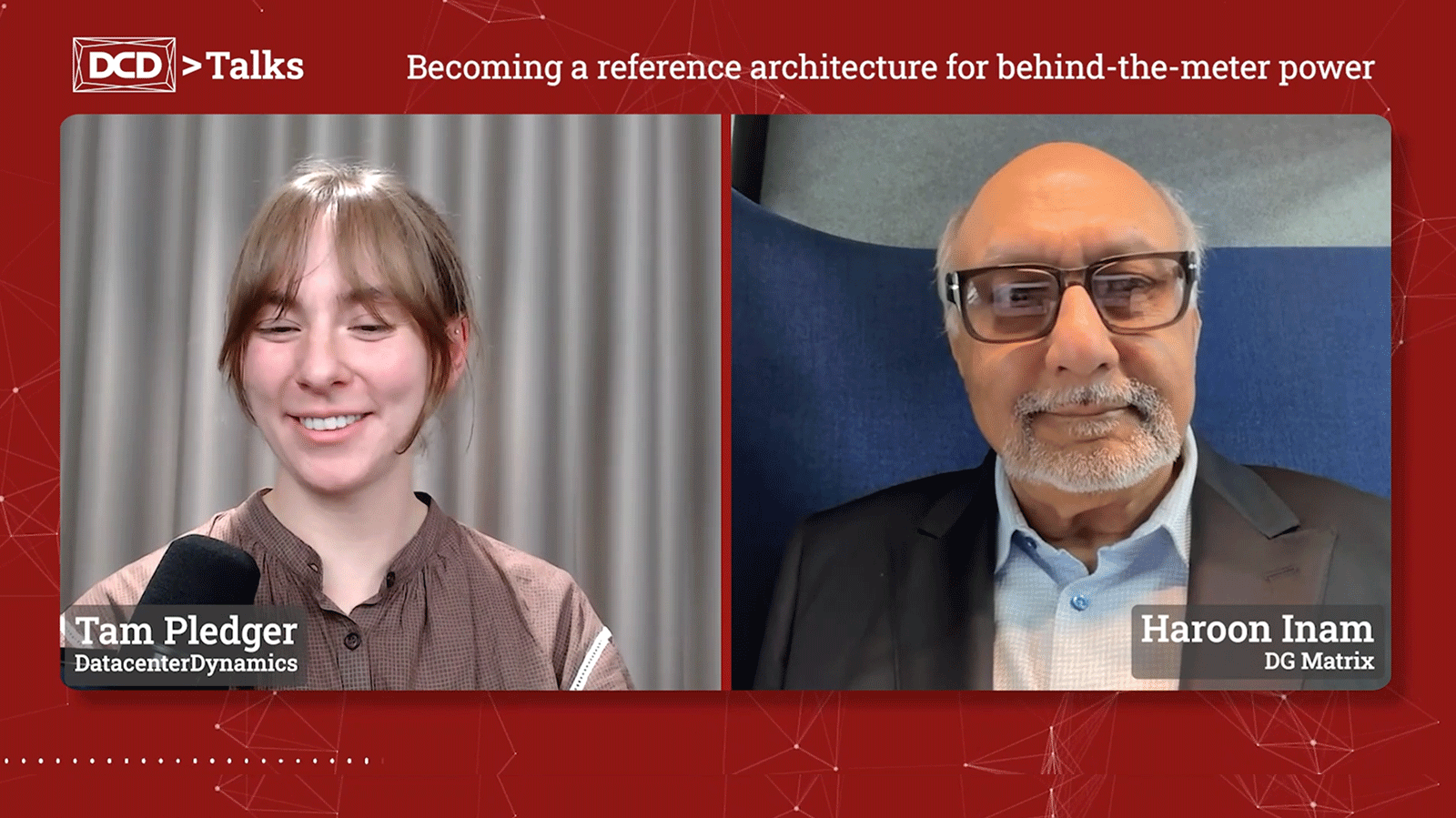
In a recent DCD>Talks interview with Data Center Dynamics (DCD), Haroon Inam, Co-Founder and Chief Executive Officer of DG Matrix, discusses the urgent need for scalable and resilient behind the meter (BTM) power architectures as data centers evolve to support Al driven demand. Haroon outlines how next generation power infrastructure must move beyond traditional utility dependent models toward flexible, modular systems that can seamlessly integrate grid power, renewables, and energy storage. He explains how DG Matrix's multi port solid state transformer (SST) InterportTMM platform enables a new reference architecture for BTM power, improving deployment speed, enhancing energy resiliency, and addressing grid interconnection constraints. As hyperscale and Al workloads push power requirements to unprecedented levels, standardized and intelligent BTM architectures are becoming essential to unlocking faster site activation and long term infrastructure scalability. Watch the full DCD Talks interview here: https://www.datacenterdynamics.com/en/videos/dcdtalks-becoming-a-reference-architecture-for-behind-the-meter-power-with-haroon-inam-dg-matrix/
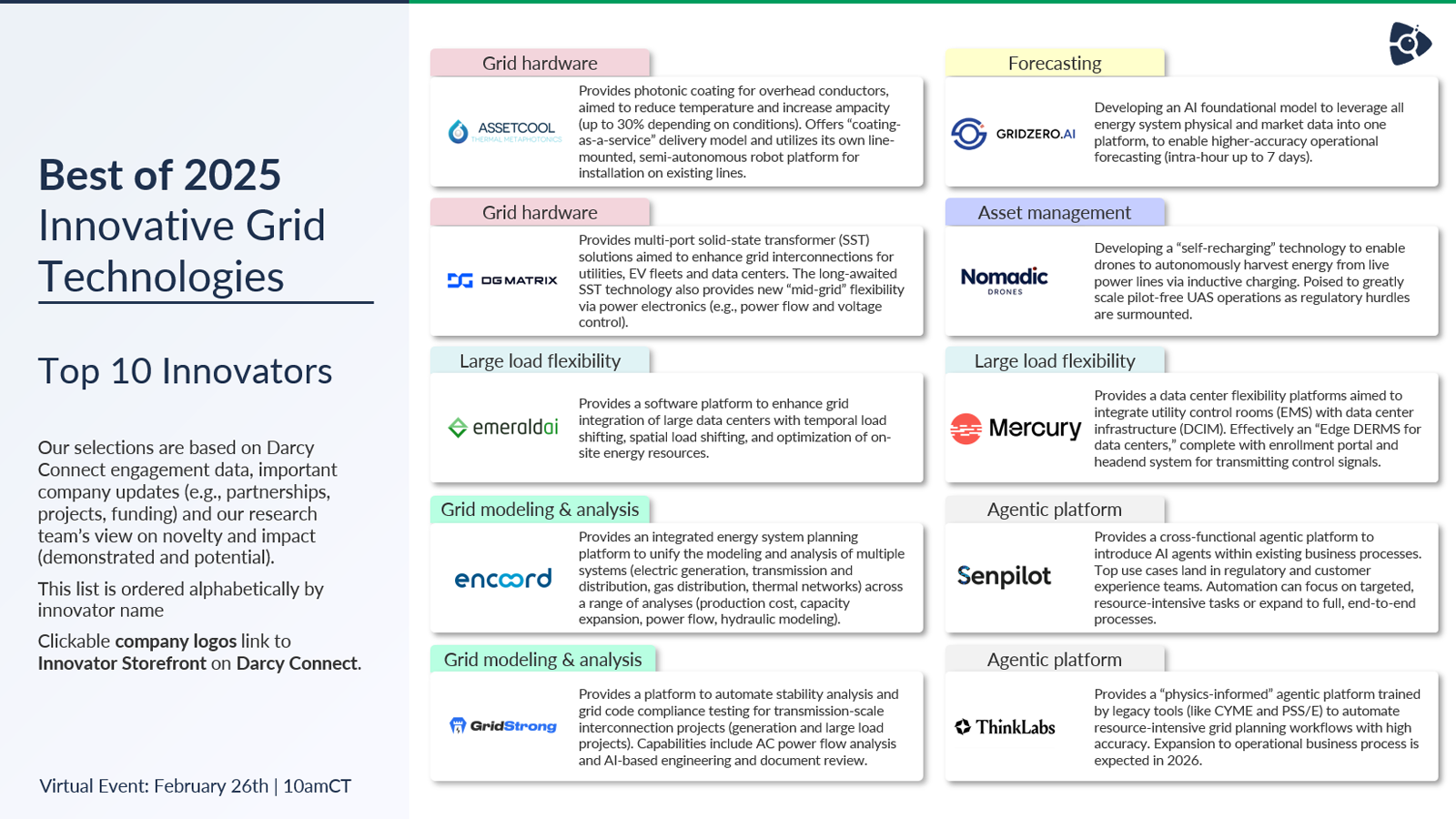
DG Matrix has been named one of the Top 10 Innovators in Innovative Grid Technologies in the Darcy Insights 2025 Review by Darcy Partners, a leading energy research and market intelligence firm. The recognition highlights DG Matrix’s advancements in solid-state transformer technology through its multi-port “Interport” platform, which simplifies the integration of solar PV, battery storage, generators, and modern loads into power infrastructure. With commercial units shipping, expanding traction in high-growth markets such as data centers, and strategic partnerships with companies including Exowatt and PowerSecure, DG Matrix continues to demonstrate strong momentum. In 2025, the company secured a $20 million seed round and a $60 million Series A financing, further reinforcing its leadership in next-generation grid hardware innovation.
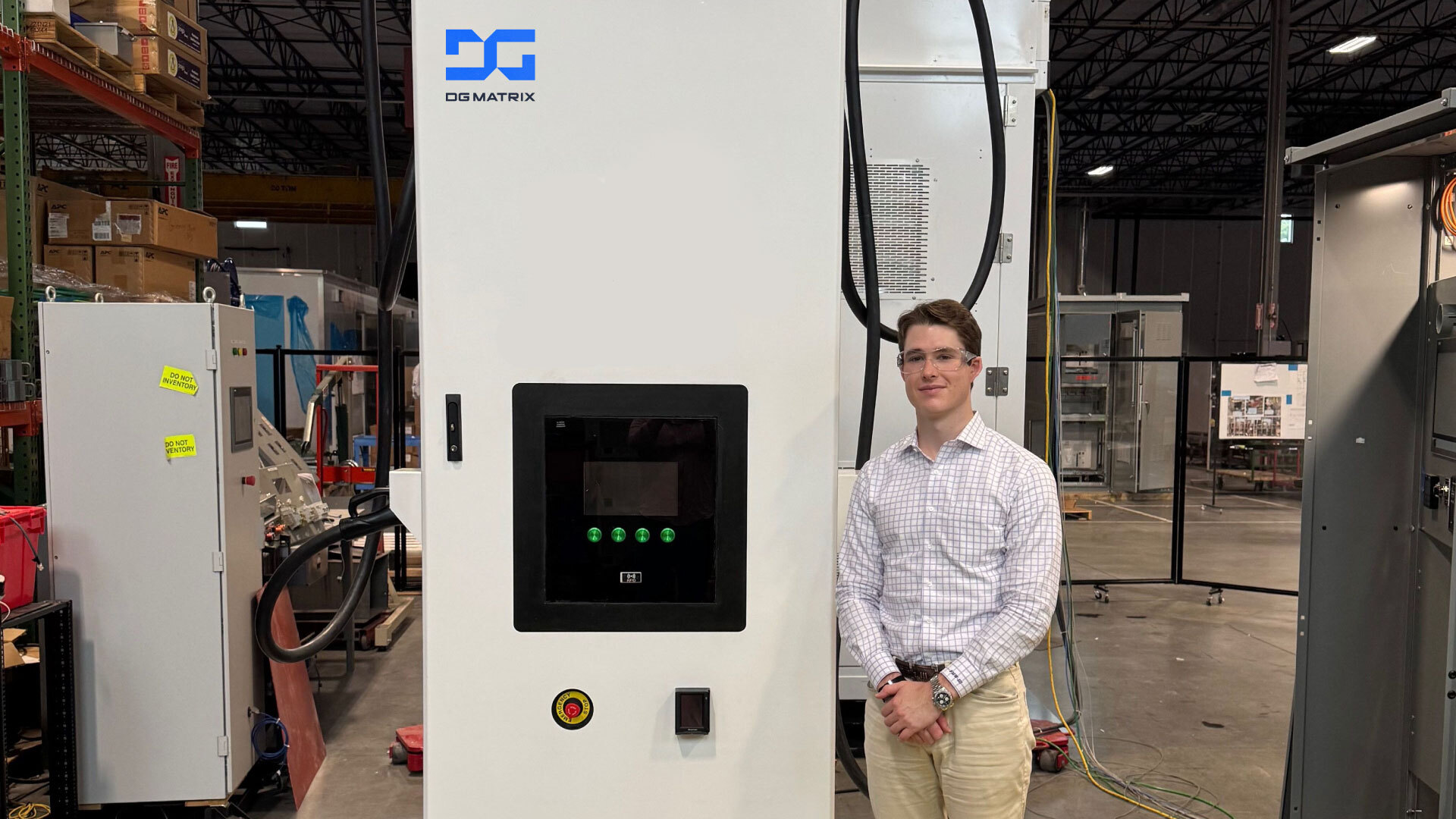
TechCrunch’s Tim De Chant sat down with Haroon Inam and Dr. Bhattacharya to learn about the firm’s series A funding from Engine Ventures and the work going into launching Interport to the world.
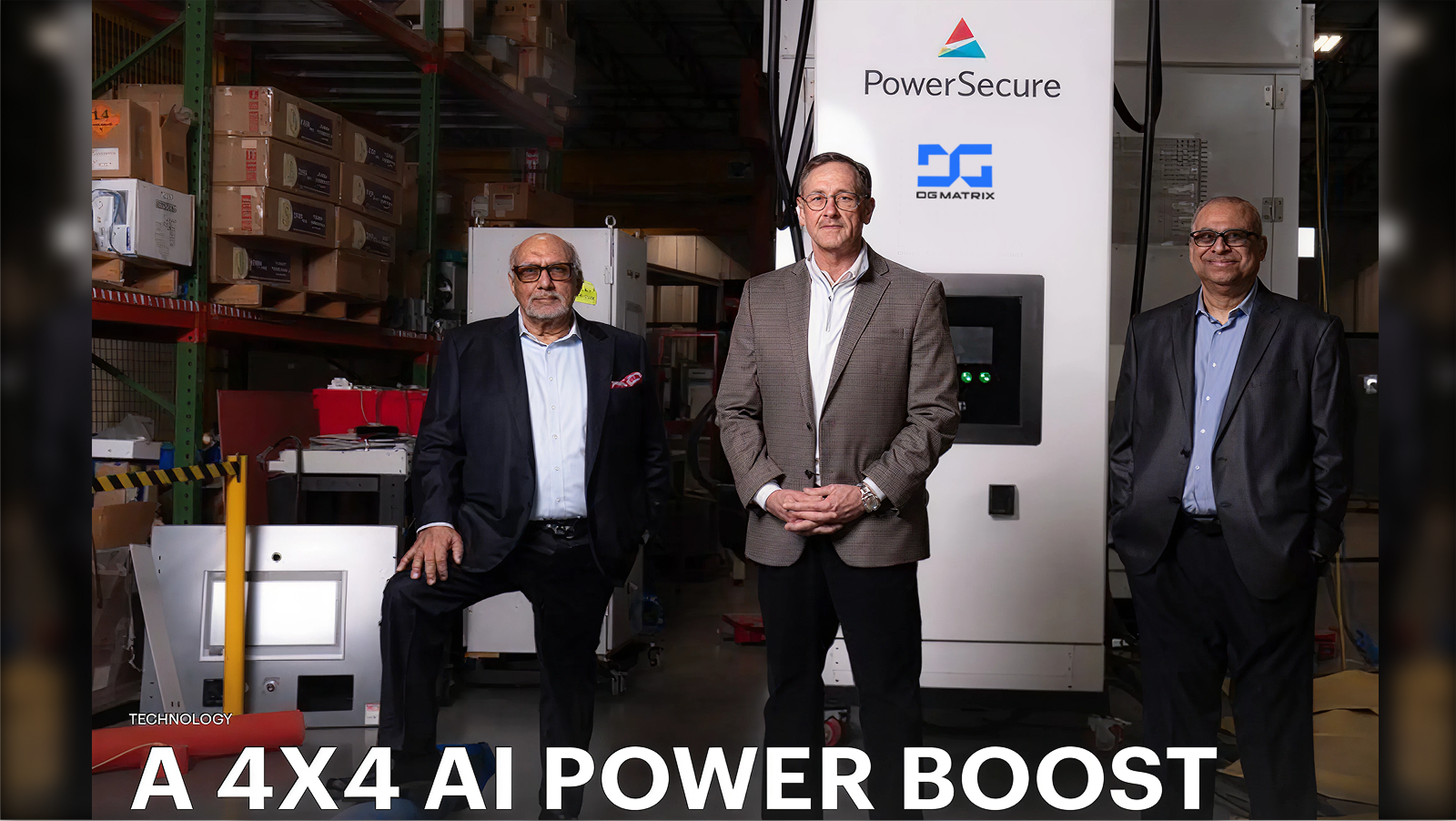
Read about DG Matrix and PowerSecure’s close partnership to power AI in this feature in the Research Triangle’s leading business publication, the Triangle Business Journal.
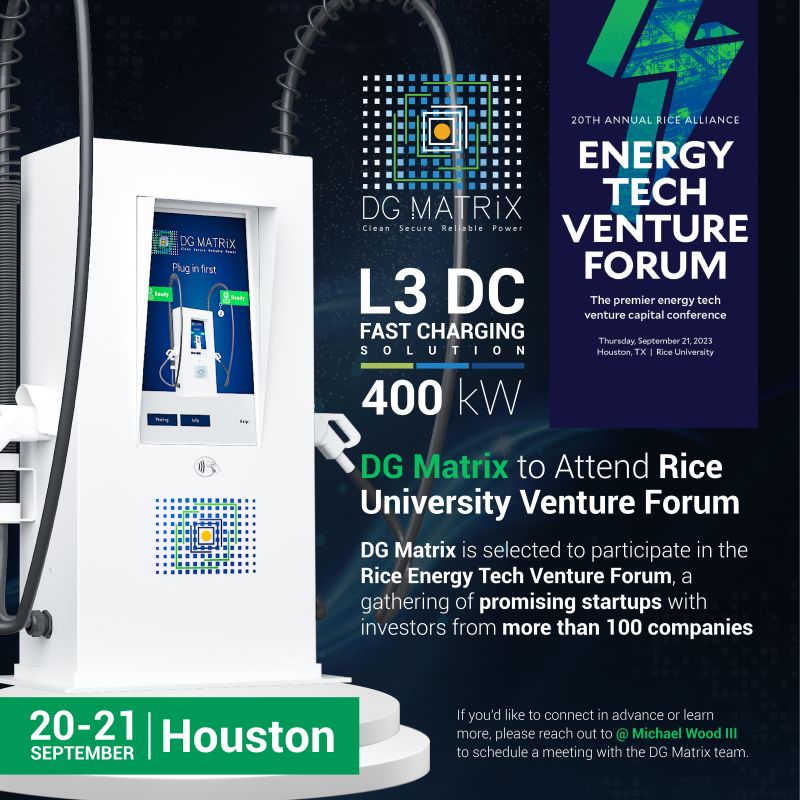
DG Matrix is excited to announce that the company was selected to attend Rice University ’s Energytech Venture Forum on September 20th-21st, an annual conference bringing together more than 100 investors and corporates with top startups across the energy industry. DG Matrix’s Haroon Inam and Michael Wood III will be attending the conference for meetings with investors at the office hours event on Wednesday followed by the main conference on Thursday. We are looking forward to the opportunity to showcase our game-changing technology to forward-thinking investors deploying capital to scale the energy transition. Please reach out to our team if you’re interested in connecting and learning more!
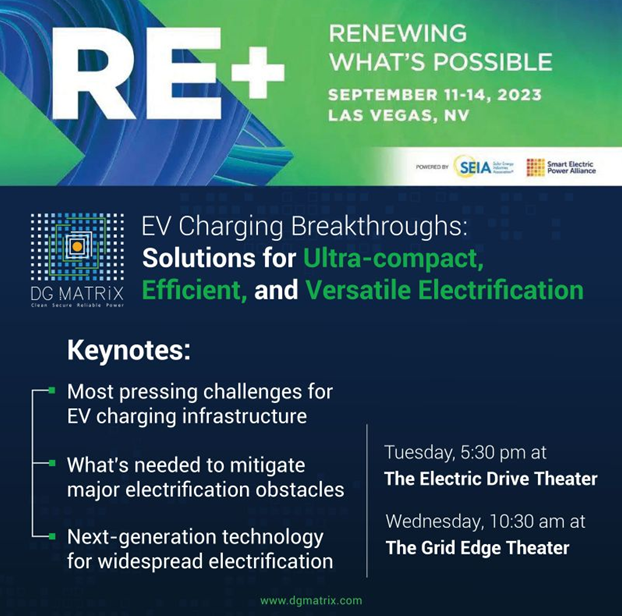
Join DG Matrix at RE+ for a conversation on the future of EV Charging and how technology advancements can mitigate key obstacles to vehicle electrification. We’ll be hosting a presentation titled EV Charging Breakthroughs: Solutions for Ultra-compact, Efficient, and Versatile Electrification on both Tuesday and Wednesday. Tuesday: 5:30pm @ the Electric Drive Theater Wednesday: 10:30am @ the Grid Edge Theater Be sure to stop by our booth at the Grid Edge Theater (Booth 3462) in the live microgrid demonstration to see our 400-kW charger for yourself!

Energy security has emerged to the forefront of energy concerns as geopolitical conflicts, major weather events, and cyber-attacks have threatened energy security around the world. DG Matrix’s solutions are built with security in mind from the ground up to ensure that everyone will have access to the stable and secure energy supplies that we need for a better world. This is why “secure” forms the second pillar of our mission of clean, secure, and reliable power. At DG Matrix, we recognize that energy security is not solely about protecting against physical threats but also about ensuring a resilient and reliable energy supply in the face of various challenges. Our approach to energy security is multifaceted, encompassing hardware, software, and systems engineering. 1. Cybersecurity: In an increasingly interconnected world, cybersecurity is paramount. We invest heavily in securing our technology against cyber threats, protecting both our systems and the data of our customers. 2. Advanced Technology: Our cutting-edge microgrid and EV charging solutions are designed to maximize energy security. By integrating renewable energy sources, energy storage systems, and smart grid technology, we can better manage and stabilize energy supply, reducing the impact of disruptions. 3. Redundancy and Reliability: We build redundancy into our systems to ensure continuous energy supply. In the event of a grid outage or other disruptions, our solutions can seamlessly switch to backup power sources, such as energy storage, to keep the lights on. 4. Grid Resilience: DG Matrix solutions are designed to enhance the resilience of local energy grids. By decentralizing power generation and distribution, we reduce vulnerability to large-scale outages and enable communities to bounce back more quickly after disasters. In a quickly changing world, energy security has never been more important yet also more threatened. DG Matrix’s technology will enable you to be confident that you and your business will remain secure even in the face of direct threats to energy security.

The transition to cleaner energy is the defining challenge of the 21st century and forms a core pillar of DG Matrix's vision for the future. Enabling a transition to a cleaner world isn’t just a goal; it’s who we are. Currently, global emissions are split into four somewhat equal categories: transportation, electricity production, industrial emissions, and agriculture. Let’s zoom in on three of those: transportation, electricity production, and industrial emissions. Technology advancements and cost reductions in renewables in recent years have made alternatives like electric vehicles and solar energy much more attainable, but some obstacles to implementation still persist. DG Matrix is enabling gigaton-scale emissions reduction in all three of these segments across two major trends: vehicle electrification and distributed energy generation. The electric vehicle market is booming, with millions of new EVs hitting the roads this decade. However, the charging infrastructure to support these new vehicles isn’t growing nearly as fast as the number of vehicles on the road. DG Matrix’s EV charging technology can help to eliminate this problem by bringing scalable, rapidly-deployable EV charging stations to locations inaccessible to conventional stations. And better yet, the small size and low material burden of the chargers mean even lower life-cycle emissions. To carbon emissions and dependence on the utility grid, many businesses are exploring on-site renewable energy regeneration, such as rooftop solar. However, facilities typically have to integrate renewable generation with the build systems, energy storage, the grid, and more, resulting in long permitting and approvals timelines as well as complex infrastructure integration. DG Matrix’s microgrid solution wipes away many of these issues by providing a compact, high-flexible architecture that can be dynamically scaled or adjusted to fit the facility’s needs. As power generation becomes more and more distributed, DG Matrix is excited to be at the forefront of enabling cleaner and more secure energy generation. Cleaner energy is in our DNA, from the products we produce, to the clients we serve, to the people on our team. Join DG Matrix’s vision of a cleaner energy future for our planet and for everyone.
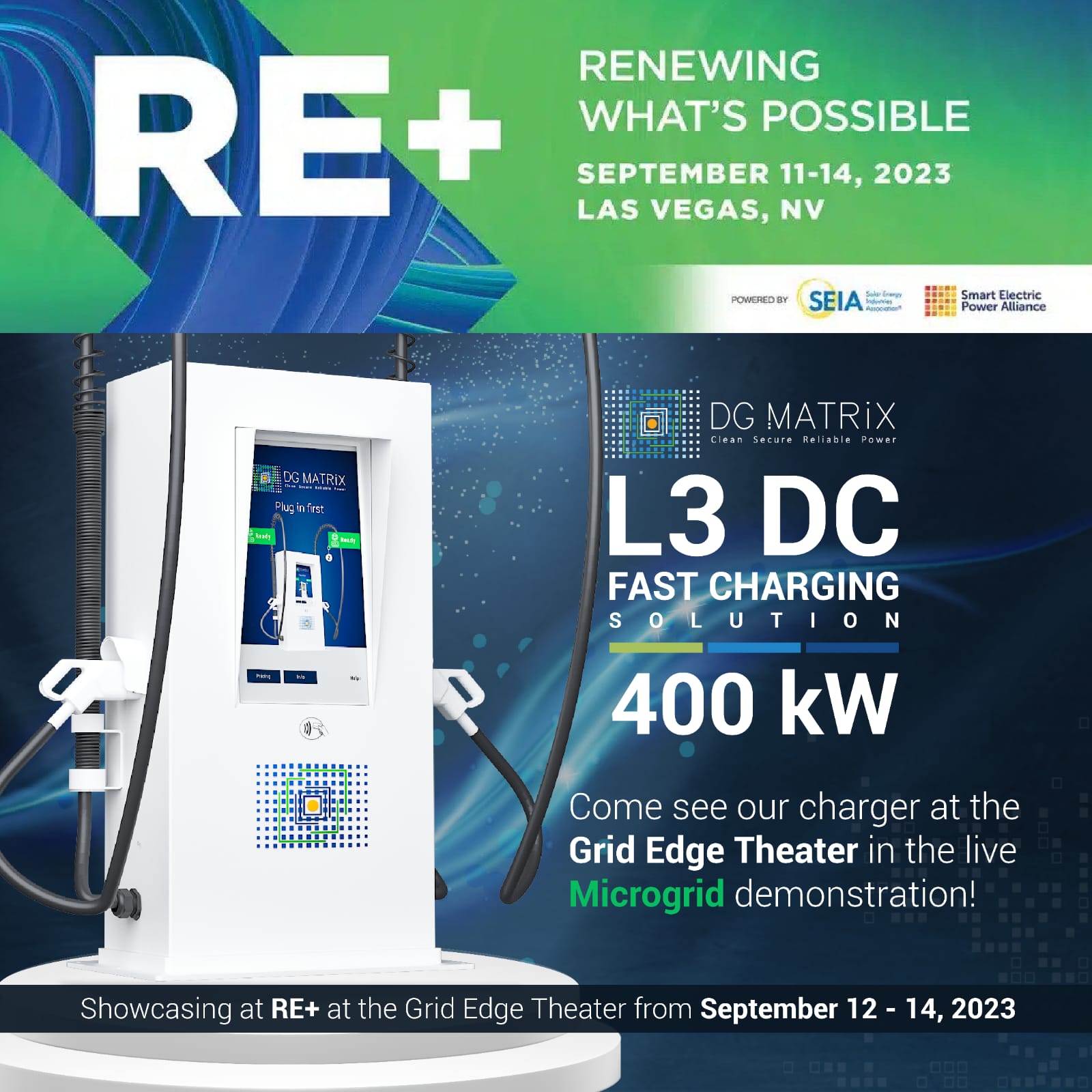
We’re also excited to announce that we will be showcasing our 400-kW EV charging unit at the conference and will have a demonstration unit on-site at the live microgrid demonstration with EMerge Alliance. If you’ll be in attendance, be sure to: -Swing by Booth 3462 on Sands Expo Level 2 to see our 400-kW charger in person and meet our team members -Attend our presentation “EV Charging Breakthroughs: Solutions for Ultra-compact, Efficient, and Versatile Charging” on Tuesday, September 12th at 5:30pm at the Electric Drive Theater -Attend the Microgrid Use Cases workshop on Monday, September 11th, where DG Matrix will be speaking
